Features
Our Dominican Republic flag is manufactured to exacting specifications for maritime use:
-
Premium Nylon Construction: Durable 100% nylon fabric for harsh marine environments and salt air exposure
-
Official Design Specifications: Accurately reproduced according to 1863 official design with proper proportional ratio
-
Maritime-Grade Hardware: Reinforced canvas heading with rust-resistant brass grommets for secure halyard attachment
-
Vivid Color Retention: Advanced dyeing technology ensures ultramarine blue, vermillion red, and white colors remain fade-resistant under UV exposure
-
Multiple Size Options: Available in 12" x 18", 2' x 3', 3' x 5', 4' x 6', and 5' x 8' to match vessel flagpole proportions
-
International Code Compliance: Meets International Code of Signals and ISM Code requirements
-
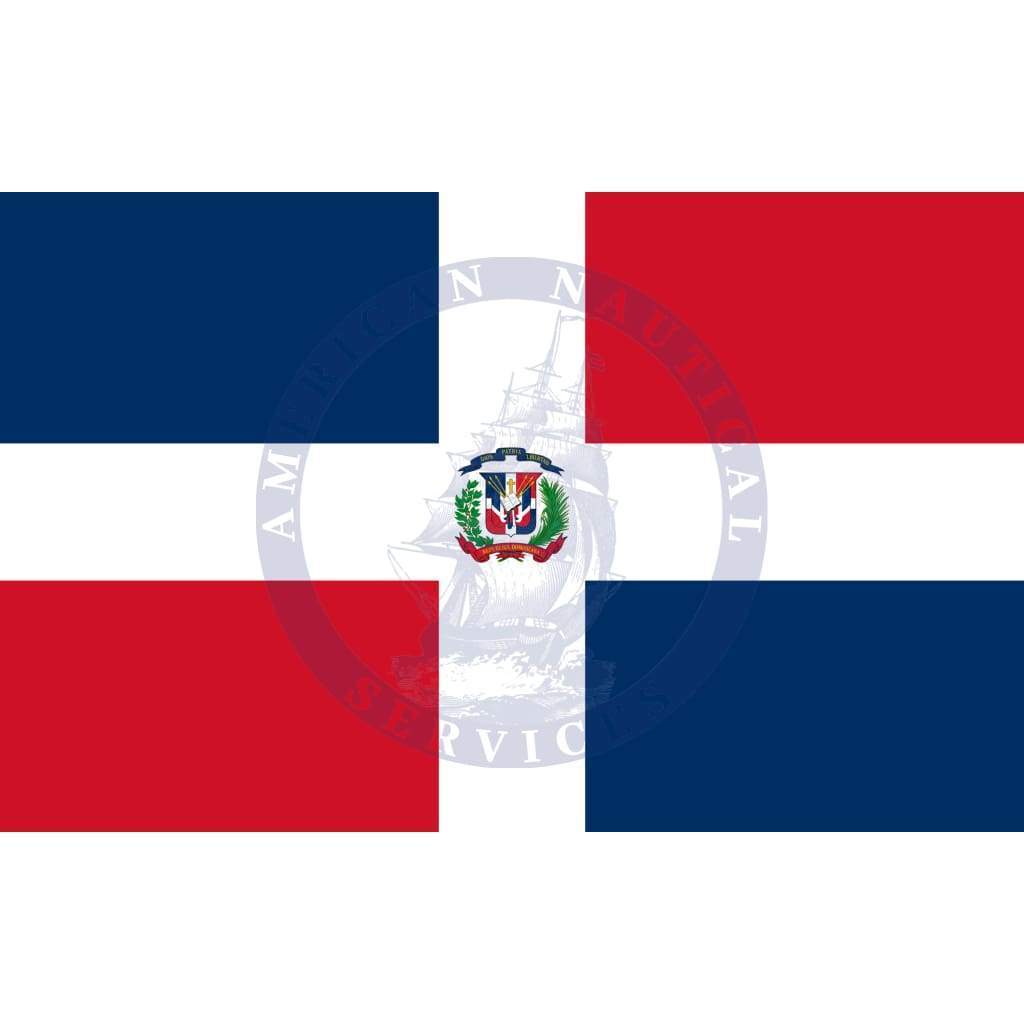
Quick Identification: Distinctive white cross dividing four quarters with national coat of arms for instant recognition
Made in USA: Proudly manufactured in the United States using premium materials.
History
The Dominican Republic flag was designed in 1838 by Juan Pablo Duarte, the founding father of the Dominican Republic. The first flags were constructed by Concepción Bona, María Trinidad Sánchez, María de Jesús Pina, and Isabel Sosa during the independence movement against Haitian occupation.
The flag was first hoisted on February 28, 1844, at the Puerta del Conde in Santo Domingo by Francisco del Rosario Sánchez, marking Dominican independence from Haiti. This event is celebrated annually on February 27 as Dominican Independence Day.
The flag was officially adopted on November 6, 1863, when the Dominican Republic's constitution was established. The constitution defines the flag: "The national flag is composed of the colours ultramarine blue and vermilion red in alternate quarters, placed so that the blue must be at the top of the flagpole, separated by a white cross." The design has remained unchanged since 1863.
Dominican Republic Flag Meaning: What Do the Colors on the Dominican Flag Mean?
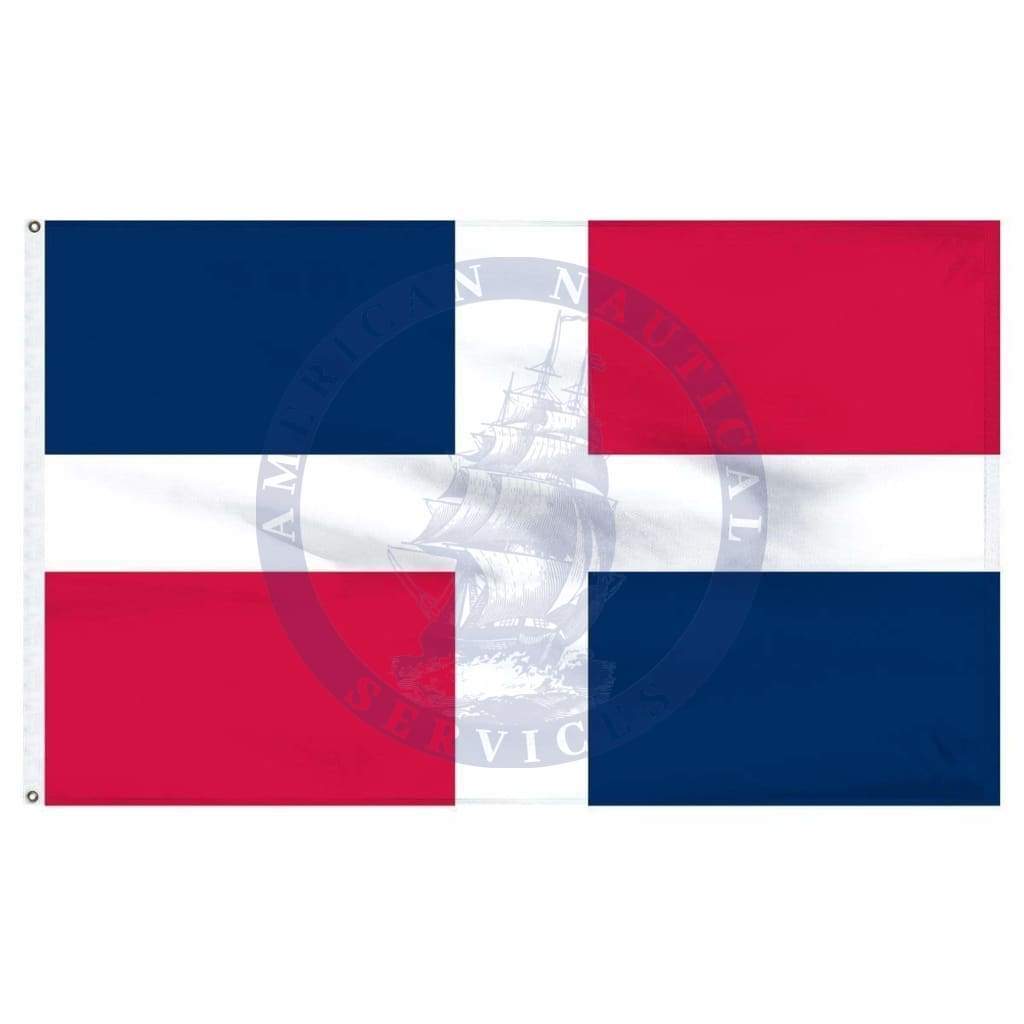
Blue Quarters (Upper Left & Lower Right): The ultramarine blue represents liberty, freedom, and God's protection over the Dominican nation.
Red Quarters (Upper Right & Lower Left): The vermillion red symbolizes the blood shed by Dominican patriots during their 1844 struggle for independence from Haiti.
White Cross: The white cross represents Christianity, faith, salvation, peace, purity, and unity.
National Coat of Arms: The coat of arms features a shield with the flag's cross design, a Bible, and the motto "Dios, Patria, Libertad" ("God, Fatherland, Freedom"). Laurel and palm fronds symbolize honor, victory, and natural beauty.
Civil Flag vs. State Flag
The Dominican Republic maintains two official versions: the state flag with coat of arms (required for maritime vessels) and the civil flag without coat of arms for civilian use.
Maritime Requirements
Vessels sailing under the Dominican Republic Country Flag are required to have this flag on board as part of flag state requirements that derive from maritime regulations in the International Code of Signals and the International Safety Management (ISM) Code. These codes are published by the International Maritime Organization (IMO) as an ongoing effort to reinforce maritime safety procedures and communications to the international maritime community.
Fleet management companies and ship owners are responsible for ensuring each vessel has appropriate flag signage onboard to maintain compliance. This Dominican Republic flag identifies the flag state a vessel is sailing under and communicates with other vessels under the International Code of Signals.
Specifications
|
Specification
|
Details
|
|
Design
|
White cross dividing four quarters with coat of arms at center
|
|
Colors
|
Ultramarine Blue, Vermillion Red, White
|
|
Quarter Pattern
|
Blue (upper left), Red (upper right), Red (lower left), Blue (lower right)
|
|
Material
|
100% Nylon
|
|
Hardware
|
Brass grommets, canvas heading
|
|
Official Adoption
|
November 6, 1863
|
|
First Hoisted
|
February 28, 1844
|
|
Designer
|
Juan Pablo Duarte (1838)
|
|
Unchanged Since
|
1863 (over 160 years)
|
Additional Information
Why Choose American Nautical Services?
As maritime supply specialists serving Caribbean operations, we understand the critical importance of proper flag state identification. Our Dominican Republic Country Flags are:
✓ Certified for maritime use
✓ Compliant with IMO standards
✓ Built to withstand Caribbean marine environments
✓ Available for immediate shipment
✓ Backed by expert nautical supply service
Frequently Asked Questions
Q: What is the official Dominican Republic flag meaning?
A: The Dominican Republic flag's meaning reflects independence, faith, and sacrifice. Blue represents liberty and freedom, red honors the blood of patriots who fought for independence in 1844, and the white cross symbolizes Christianity, faith, and peace.
Q: When was the Dominican Republic flag adopted?
A: The flag was designed by Juan Pablo Duarte in 1838, first hoisted on February 28, 1844, and officially adopted on November 6, 1863.
Q: What do the colors on the Dominican flag mean?
A: Ultramarine blue represents liberty and God's protection, vermillion red represents the blood shed during independence struggles, and white represents Christianity, purity, and unity.
Q: Is the Dominican Republic flag required for vessels?
A: Yes, vessels registered under the Dominican Republic flag state must display the Dominican Republic Country Flag (state version with coat of arms) according to international maritime regulations including the International Code of Signals and ISM Code.
Q: What is the difference between the Dominican Republic's civil and state flags?
A: The state flag includes the national coat of arms with "Dios, Patria, Libertad" motto and is required for maritime vessels. The civil flag without the coat of arms is used for general civilian purposes.