




Fast and reliable service. Excellent
Shopping, ordering and delivery outstanding. Acta non Verba always delivers.
Quick delivery
British Admiralty Nautical Chart 1791: Caledonian Canal
Good Service and fast delivery.

The International Maritime Dangerous Goods (IMDG) Code is the IMO's mandatory standard for classifying, packing, marking, documenting, stowing, and segregating dangerous goods carried by sea in packaged form. The IMDG Code 2024 Edition (Amendment 42-24) has been mandatory since 1 January 2026 and remains the compliant edition through 31 December 2027. Amendment 43-26, adopted in May 2026, opens for voluntary use on 1 January 2027 and becomes mandatory on 1 January 2028.
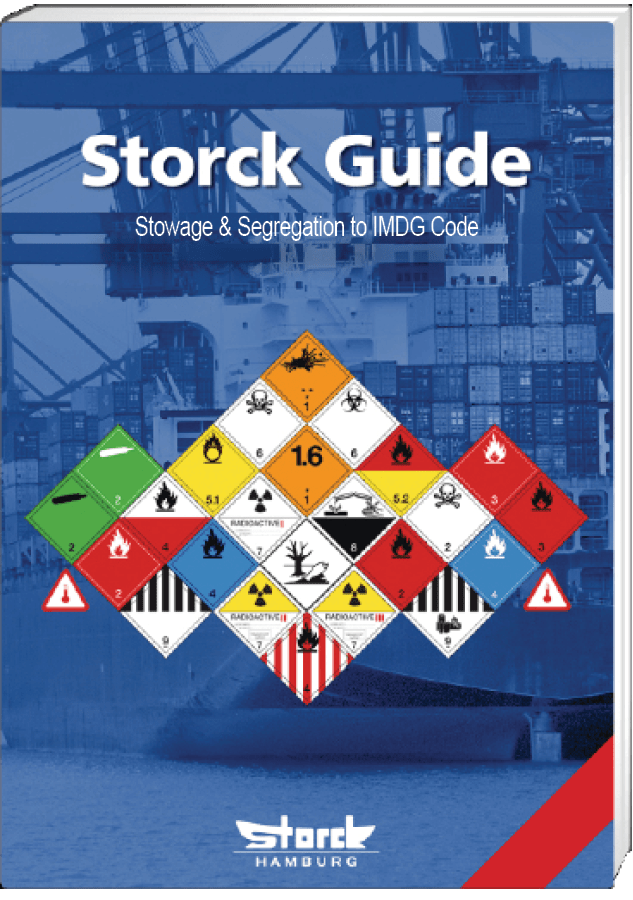
ANS stocks both editions, the IMDG Code Supplement, and the Storck Guide to stowage and segregation, in print and digital formats. As an official IMO publications distributor, ANS supplies current editions to vessel operators, shippers, freight forwarders, and terminal staff worldwide.
Amendment 42-24, published as the IMDG Code 2024 Edition, is the edition currently in force for shipments, documentation, and training. IMO adopted it through Resolution MSC.556(108) in May 2024, allowed voluntary use from 1 January 2025, and made it mandatory on 1 January 2026, replacing the 2022 Edition (Amendment 41-22). Dangerous goods declarations, safety data sheet transport sections, and onboard copies should all reference 42-24.
The next edition is already confirmed. The IMO Maritime Safety Committee adopted Amendment 43-26 at its 111th session in May 2026 through Resolution MSC.587(111). Administrations may apply it voluntarily from 1 January 2027, and it becomes mandatory on 1 January 2028. During 2027, shippers may work to either 42-24 or 43-26 where the relevant Administration permits early application, but each shipment should follow one edition consistently. The IMDG Code 2026 Edition (Amendment 43-26) is available now for early planning.
IMO amends the IMDG Code every two years to keep it aligned with the UN Recommendations on the Transport of Dangerous Goods, Model Regulations. Each amendment is adopted in an even-numbered year, may be applied voluntarily from 1 January of the following odd-numbered year, and becomes mandatory 12 months later. Every edition is therefore usable for three years in total: one voluntary year followed by two mandatory years. Amendment 42-24 follows that pattern and aligns with the 23rd revised edition of the UN Model Regulations.
Planning around the cycle avoids a year-end changeover. Operators with fleet-wide training programs or standardized consignment templates typically review a new amendment during its voluntary year, so procedures and documentation are updated well before the mandatory date.
Amendment 42-24 introduced new UN numbers for sodium-ion batteries (UN 3551 and UN 3552) and for vehicles powered by lithium-ion, lithium-metal, and sodium-ion batteries (UN 3556 to UN 3558). Carbon products lost their former exemptions, with new special provisions SP 978 and SP 979 setting packing, stowage, and documentation requirements. The amendment also revised definitions, packing instructions, stowage codes, and the organic peroxides table, and led to a revised EmS Guide issued as MSC.1/Circ.1588/Rev.3.
Amendment 43-26 continues the focus on batteries and vehicles, with updated provisions for the carriage of batteries and clearer criteria for transporting vehicles, including electric vehicles. A detailed walkthrough of the current edition is available in the guide to Amendment 42-24 changes in dangerous goods transport.
The IMDG Code is published in two volumes. Volume 1 covers general provisions, definitions, training, classification, packing and tank provisions, consignment procedures, and transport operations, which are Parts 1, 2, and 4 to 7 of the Code. Volume 2 contains Part 3, the Dangerous Goods List, along with special provisions, limited and excepted quantities, the appendices, and the index.
The IMDG Code Supplement is a separate publication holding the texts that operate alongside the Code. Its contents include the EmS Guide for fire and spillage response, the Medical First Aid Guide (MFAG), reporting procedures, the IMO/ILO/UNECE Code of Practice for Packing of Cargo Transport Units (CTU Code), the INF Code for irradiated nuclear fuel, and recommendations on the safe use of pesticides in ships. Vessels carrying dangerous goods generally hold both the Code and the Supplement, because shipboard emergency response depends on the EmS and MFAG material.
The Storck Guide to stowage and segregation presents the Part 7 segregation requirements in a quick-reference format for cargo planners and ship's officers. Planners should use the edition matched to Amendment 42-24, since the earlier 41-22 edition reflects a superseded amendment.
SOLAS Chapter VII, Part A makes the IMDG Code mandatory for ships carrying dangerous goods in packaged form, and MARPOL Annex III applies it to packaged marine pollutants. The current edition is needed by shippers and consignors classifying and declaring cargo, freight forwarders preparing documentation, container packers and terminal operators, shipping lines and vessel crews responsible for stowage and segregation, and dangerous goods safety advisors.
In the United States, the Hazardous Materials Regulations authorize use of the IMDG Code for shipments that include a sea leg, under 49 CFR Part 171, Subpart C. Shippers relying on that authorization must still meet the additional conditions PHMSA sets in that subpart.
Chapter 1.3 of the IMDG Code requires shore-based personnel involved in the transport of dangerous goods to receive training commensurate with their responsibilities, covering general awareness, function-specific duties, and safety. Employers must keep records of the training each person has received, and training should reflect the edition currently in force. Seagoing crew training falls under STCW and flag state requirements. Course material built on Amendment 41-22 is now out of date and should be revised to 42-24.
Yes. The 2024 Edition (Amendment 42-24) has been mandatory since 1 January 2026 and remains the compliant edition until 31 December 2027. From 1 January 2028, Amendment 43-26 replaces it.
Amendment 43-26 may be applied voluntarily from 1 January 2027, where the Administration permits, and becomes mandatory on 1 January 2028. Operators with long documentation or training lead times usually start the transition during 2027, while those with simpler operations can keep working to 42-24 until the mandatory date.
No. The Supplement is sold separately. The two-volume set contains the Code itself, while the Supplement carries the EmS Guide, MFAG, CTU Code, and other related texts.
The Code groups dangerous goods into nine classes, from explosives in Class 1 to miscellaneous dangerous substances and articles in Class 9. Each class is explained in the guide to the nine classes of IMDG dangerous goods.
The IMDG Code governs dangerous goods carried by sea and follows a two-year amendment cycle. The IATA Dangerous Goods Regulations govern carriage by air and are reissued every year. Multimodal shipments that include both a sea leg and an air leg must satisfy both.
No. Only the mandatory edition, or the new edition during its voluntary year, is accepted for compliance. Carrying or working to a superseded edition such as Amendment 41-22 can lead to rejected cargo bookings and port state control deficiencies.
For fleet orders, digital licenses, or help matching editions to a vessel's carriage requirements, contact ANS at +1 (954) 522-3321 or sales@amnautical.com.
Phone: +1 954-522-3321
Whatsapp: +1 954-292-4212
E-mail: sales@amnautical.com
Review us on Google!
American Nautical Services, Inc.
3311 S Andrews Ave, Suite 11
Fort Lauderdale, FL 33316
United States of America
Mon-Fri 8am-5pm - Sat. 9am-5pm
Fast and reliable service. Excellent
Shopping, ordering and delivery outstanding. Acta non Verba always delivers.
Quick delivery
British Admiralty Nautical Chart 1791: Caledonian Canal
Good Service and fast delivery.