Overview
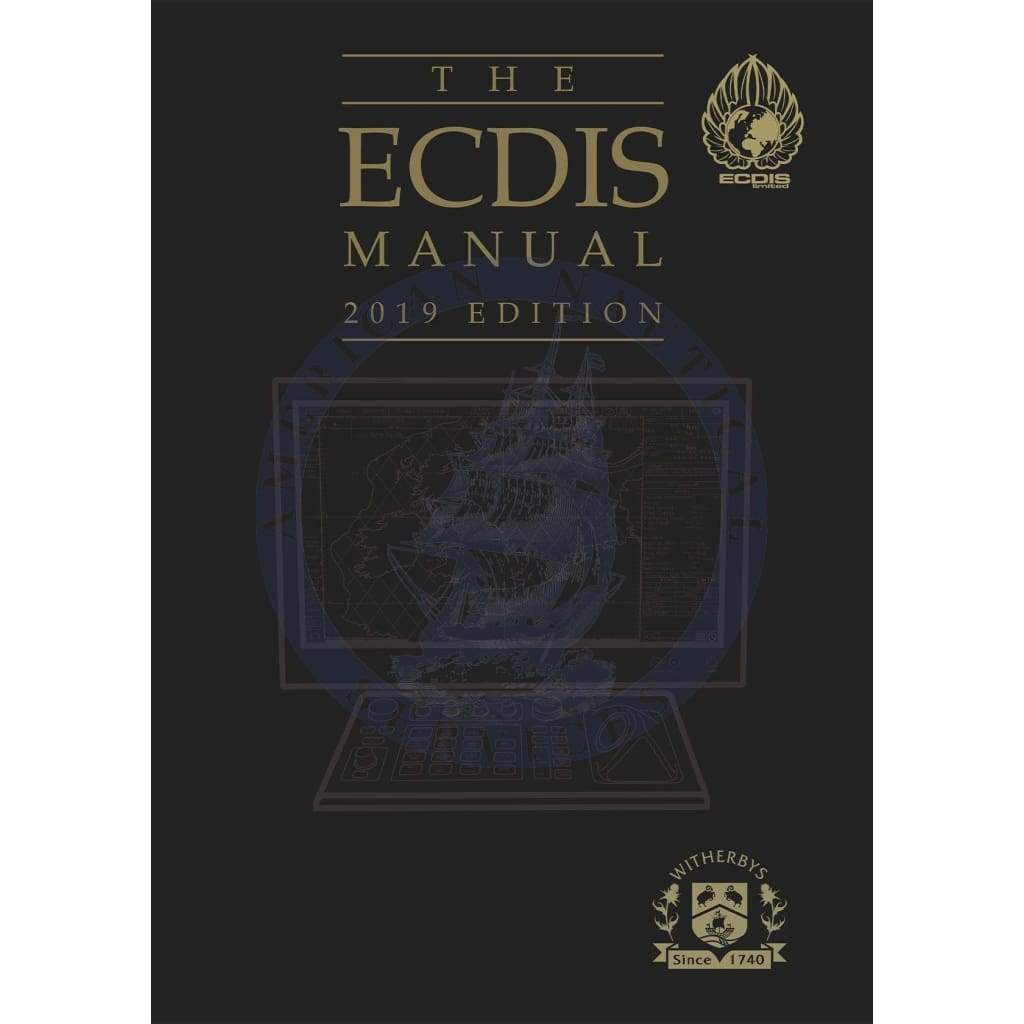
Understanding ECDIS and selecting the right ECDIS solution is vital for ensuring the safe and precise navigation of a vessel on track, and on time. The ECDIS Manual, written by and for ECDIS navigators, draws on the knowledge of leading ECDIS experts and manufacturers, as well as calssification societies and NGOs, to support a vessel's transition to digital navigation in accordance with IMO, IHO, Flag State, PSC, ISM, SMS and SIRE requirements.
This publication is a comprehensive guide to the use of ECIDS systems. It outlines the history and development of digital navigation and provides detailed explanations of electronic charts and operating systems, supplemented by over 500 screenshots and colour images. It includes familiarisation checklists for a number of different systems, as well as the CIRM GL-001 Guideline for ECDIS Performance Test Procedure. The book also summarises the contributory factors in several ECDIS-related incidents.
Content
Introduction
Acknowledgements
ECDIS Abbreviations and Useful Info
Photo Acknowledgements
Foreword by Admiral Nick Lambert, Former National Hydrographer UKHO
About ECDIS Ltd
-
History of the Electronic Chart
-
International Agreement
-
Early Solutions to Comparing Radar and Charts
-
From Navigation Aids to Navigation Systems to Bridge Systems
-
Types of Electronic Position-Finding Equipment
-
Integrated Bridge Projects and Bridge Mechanisation
-
Inventing Electronic Charts: The First Generation
-
Creating Official International Standards
-
UKHO ARCS (Admiralty Raster Chart Service)
-
Organising Worldwide Digital Chart Production
-
Third Generation Vector Charts, 1995 to 2010
-
Commercial Electronic Charts for the Leisure Market, 2005 to 2010
-
Fourth Generation Electronic Charts with Passage Planning Tools, 2010
-
Fifth Generation Electronic Charts, 2018
-
ECDIS Regulations
-
The IHO
-
International Electrotechnical Commission (IEC)
-
International Maritime Organization (IMO)
-
IMO Resolution MSC.232(82)
-
CIRM
-
Date Changes in Performance Standards
-
IMO Circulars
-
Safety of Life at Sea (SOLAS) Convention
-
SOLAS Ch V, Regulation 2, Part 2
-
SOLAS Ch V, Regulation 19, Part 2.1.4
-
SOLAS Ch V, Regulation 19, Part 2.1.5
-
SOLAS Ch V, Regulation 27
-
ISM and Flag Compliance
-
Standards of Training, Certification and Watchkeeping (STCW) Convention
-
International Safety Management (ISM) Code
-
Generic ECDIS Training
-
Type-Specific and Familiarisation Training
-
Safety Management System
-
Flag States
-
Flag State ECDIS Requirements
-
Port State Control (PSC)
-
Further Legal Considerations
-
SIRE
-
ECDIS Operator’s Responsibility
-
The Electronic Chart
-
Introduction
-
Electronic Chart Data
-
Definitions
-
Vector Charts
-
Defining a Vector Chart
-
Varying Standards of Vector Charts
-
RENC
-
The Basics of ENC
-
Hydrographic Office Approved Electronic Charts
-
Use of Data
-
Unofficial or Private Data
-
Classification of Official Data
-
Flag State Adoption
lang="en-US"
Introduction
The economic constraints of modern shipping signify more often than not that we are navigating to rigid time scales, in hazardous conditions, with less support. Being able to perform safe and precise navigation on track, and on time, is fundamental. ECDIS was designed to give the mariner greater spatial awareness in increasingly dangerous and hazardous conditions. After all, things happen quickly at 20+ knots and often the nearest point of danger is just below your keel. Understanding ECDIS and selecting the right ECDIS solution is vital when you consider that there are currently 27 diverse manufacturers, several providers of approved ENC and RNC charts, and varying standards of training. In 2009
Mr Malcolm Instone, Director of Operations to ECDIS Ltd, paraphrased Murphy’s law:
“Choose the wrong ECDIS solution, and you won’t see the light at the end of the tunnel you will see the light of the oncoming train.”
Sadly for some, he was right.
The ECDIS Manual has been written by ECDIS navigators for ECDIS navigators. The manual is about sharing best practice and ensuring that the transition from ‘sail to steam’ is efficient and safe. The principles of navigation have not changed, but the art of navigation has. With the
right training and to some degree the right ECDIS, you can replace paper charts with an ECDIS in all operating conditions – even when GNSS is unavailable, contrary to common misconception!
This manual, in conjunction with the leading ECDIS experts, manufacturers, international organisations and leading societies, has ultimately been the hard work of the author Mr Peter Thornton MBE. Peter is a traditional ‘paper’ Master Mariner who made the transition to digital navigation. He has navigated for 15 years across the world, berth to berth, utilising different ECDIS systems, developing an immeasurable experience of the good, the bad and the ugly of ECDIS navigation. His contribution to the digital transition is unsurpassed.
The manual has been written to support a vessel’s transition to digital navigation in accordance with IMO, IHO, Flag State, PSC, ISM, SMS and SIRE requirements. It only leaves me to thank Peter, Priscilla and Mal without whom it would not have been possible.
lang="en-US"
Details
Title: The ECDIS Manual
Subtitle: Second Edition
Number of Pages: 172
Product Code: WS1701K
ISBN: ISBN 13: 978-1-85609-823-6 (9781856098236), ISBN 10: 1-85609-823-0 (1856098230)
Published Date: October 2019
Binding Format: Hardback
Book Height: 350 mm
Book Width: 217 mm
Book Spine: 15 mm
Weight: 1.20 kg
Author: ECDIS LTD